
.
Review by Cris Rhodes
DESCRIPTION OF THE BOOK: The Torres sisters dream of escape. Escape from their needy and despotic widowed father, and from their San Antonio neighborhood, full of old San Antonio families and all the traditions and expectations that go along with them. In the summer after her senior year of high school, Ana, the oldest sister, falls to her death from her bedroom window. A year later, her three younger sisters, Jessica, Iridian, and Rosa, are still consumed by grief and haunted by their sister’s memory. Their dream of leaving Southtown now seems out of reach. But then strange things start happening around the house: mysterious laughter, mysterious shadows, mysterious writing on the walls. The sisters begin to wonder if Ana really is haunting them, trying to send them a message—and what exactly she’s trying to say.
In a stunning follow-up to her National Book Award–longlisted novel All the Wind in the World, Samantha Mabry weaves an aching, magical novel that is one part family drama, one part ghost story, and one part love story.

MY TWO CENTS: In Tigers, Not Daughters, Samantha Mabry impossibly weaves the story of the Torres sisters, who are marred by grief and plagued by trauma. The novel opens with the Torres sisters, Jessica, Iridian, Rosa, and Ana, trying to make their escape from their negligent father. Their attempt is foiled, however, by a group of unwitting boys who often spy on Ana. Caught by their father, the sisters are returned home. Soon after, Ana attempts a solo escape, but this time she falls from her window. With Ana gone, Jessica, Iridian, and Rosa are left bereft. Unable to cope, the sisters’ lives fall into disrepair.
Picking up a year after Ana’s untimely death, each sister narrates her own chapters in this book, with the boys who witnessed their initial escape acting as a sort of Greek chorus, alerting the reader to the Torres sister’s plight before Ana’s death. With Ana gone, Jessica tries to provide for the family, Iridian is lost in her writing, and Rosa has been attempting to learn to talk to animals. Their grief is palpable, and through Mabry’s delicate prose, their sorrow leaps off the page. But, as the narrative progresses, it becomes clear that the girls aren’t just plagued by the loss of Ana, but by her continued presence.
Ana’s ghost makes itself known to all of the sisters, as well as the boys next door, in various forms. From spectral figures to animal encounters, the Torres sisters must contend with Ana’s spirit’s force upon their lives. As the tension rises, so too does the sense that not all is as it seems in the Torres’s world. The reader is left with a sense of urgency as well as a mounting fear that more tragedy is at the girls’ doorstep.
Tigers, Not Daughters is simultaneously a story of one family’s very real grief and the very fantastic circumstances following Ana’s death. The combination is a heady one. Reading Tigers, Not Daughters, for me, was difficult. The book is at once un-put-down-able and one that you must take in small doses. Iridian’s chapters, in particular, felt like a knife to the heart. Her love for Ana is palpable and her guilt over Ana’s death is just as strong. I needed to know what happened next, but I often found myself reading as if I were peeping between my fingers, wanting to cover my eyes. And, what’s more, I didn’t want the book to end. I wanted to live with the Torres sisters for a little while longer.
It’s difficult to explain the impact of Tigers, Not Daughters. Perhaps it’s because this book was so unlike any I’ve ever read before. It has hints of magical realism and horror, but it is certainly a creature of its own. While parts are somewhat muddled, they felt realistic to the inner turmoil experienced by Mabry’s multiple narrators. This may prove difficult for some readers, however. What’s more, some elements of Tigers, Not Daughters might prove alienating to readers who want a straightforward narrative (there’s an escaped hyena, just so you know), though these do ultimately get resolved and make sense to the overarching plot.
Mabry’s work has always captivated me (I’m a big fan of A Fierce and Subtle Poison). And that is no different in Tigers, Not Daughters. This book, released just as the pandemic was dawning, is certainly an antidote to the loneliness and listlessness we might all be feeling right now. Yes, the Torres sisters’ story is sad-but it’s also a story of love and triumph and family. It is the story of how three young women make sense of tragedy and rise above.
.
.

ABOUT THE AUTHOR (from her website): Samantha was born four days before the death of John Lennon. She grew up in Dallas, playing bass guitar along to vinyl records in her bedroom after school, writing fan letters to rock stars, doodling song lyrics into notebooks, and reading big, big books.
In college at Southern Methodist University, she majored in English literature, minored in Spanish, and studied Latin and classics. After that, she went on to receive a master’s degree in English from Boston College.
These days, she teaches at a community college and spends as much time as possible in the west Texas desert.
A FIERCE AND SUBTLE POISON (Algonquin Young Readers, spring 2016) was her first novel. ALL THE WIND IN THE WORLD, a Western, was published in the fall of 2017 and was nominated for the National Book Award for Young Peoples’ Literature. TIGERS, NOT DAUGHTERS released in the spring of 2020 and received six starred trade reviews.
.
.
.

ABOUT THE REVIEWER: Cris Rhodes is an assistant professor of English at Shippensburg University of Pennsylvania. She teaches courses of writing, culturally diverse literature, and ethnic literatures. In addition to teaching, Cris’s scholarship focuses on Latinx youth and their literature or related media. She also has a particular scholarly interest in activism and the ways that young Latinxs advocate for themselves and their communities
 DESCRIPTION OF THE BOOK: Selena Quintanilla’s music career began at the age of nine when she started singing in her family’s band. She went from using a hairbrush as a microphone to traveling from town to town to play gigs. But Selena faced a challenge: People said that she would never make it in Tejano music, which was dominated by male performers. Selena was determined to prove them wrong.
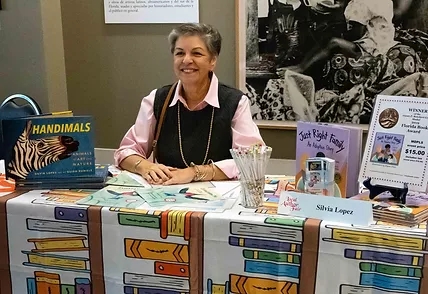 ABOUT THE AUTHOR: (from the dust jacket) A Cuba native raised in Miami,
  ABOUT THE REVIEWER: Emily R. Aguiló-Pérez is an Assistant Professor of English (Children’s Literature) at West Chester University of Pennsylvania. Her teaching and research are in the areas of children’s literature (particularly Latinx literature), girlhood studies, and children’s cultures. Currently her research examines representation in transitional chapter books that feature Latinx characters. In addition, she is managing editor of Anansesem: The Caribbean Children’s Literature Magazine. She has presented on Latinx children’s books at various conferences and has served on children’s book award committees such as the 2018 Pura Belpré Award. At present, she is part of the Pennsylvania Center for the Book’s “A Baker’s Dozen” committee.
 DESCRIPTION OF THE BOOK (from
 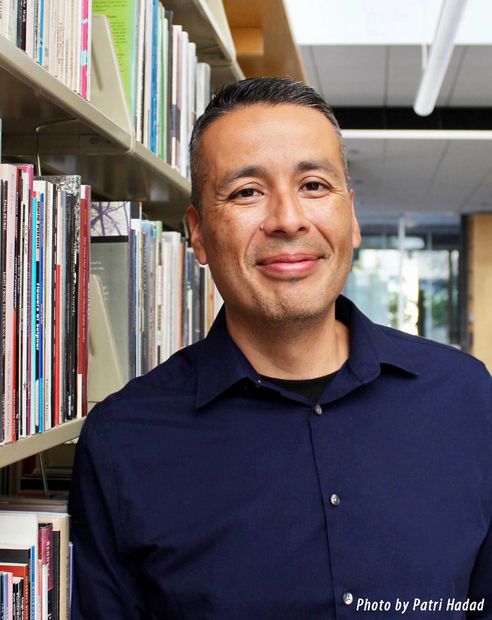 ABOUT THE AUTHOR (From
  ABOUT THE REVIEWER: Katrina Ortega (M.L.I.S.) is the manager of the New York Public Library’s College and Career Pathways program. Originally from El Paso, Texas, she has lived in New York City for six years. She is a strong advocate of continuing education (in all of its forms) and is very interested in learning new ways that public libraries can provide higher education to all. She is also very interested in working with non-traditional communities in the library, particularly incarcerated and homeless populations. While pursuing her own higher education, she received two Bachelors of Arts degrees (in English and in History), a Masters of Arts in English, and a Masters of Library and Information Sciences. Katrina loves reading most anything, but particularly loves literary fiction, YA novels, and any type of graphic novel or comic. In her free time, if she’s not reading, Katrina loves to walk around New York, looking for good places to eat.
 DESCRIPTION OF THE BOOK (from

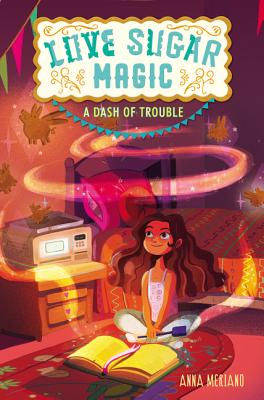 DESCRIPTION OF THE BOOK: Leonora Logroño’s family owns the most beloved bakery in Rose Hill, Texas, spending their days conjuring delicious cookies and cakes for any occasion. And no occasion is more important than the annual Dia de los Muertos festival.
 ABOUT THE REVIEWER: Cecilia Cackley is a performing artist and children’s bookseller based in Washington DC where she creates puppet theater for adults and teaches playwriting and creative drama to children. Her bilingual children’s plays have been produced by GALA Hispanic Theatre and her interests in bilingual education, literacy, and immigrant advocacy all tend to find their way into her theatrical work. You can find more of her work at
  DESCRIPTION FROM THE BOOK JACKET: It’s the summer of 1911 in northern Mexico, and thirteen-year-old Evangelina and her family have learned that the rumors of soldiers in the region are true. Her father decides they must leave their home to avoid the violence of the revolution. The trip north to a small town on the U.S. side of the border is filled with fear and anxiety for the family as they worry about loved ones left behind and the uncertain future ahead.
 ABOUT THE AUTHOR: Diana J. Noble was born in Laredo, Texas, and grew up immersed in both Mexican and American cultures. Her young adult novel, Evangelina Takes Flight, is based loosely on her paternal grandmother’s life, but has stories of other relatives and memories from her own childhood woven into every page. It’s received high praise from Kirkus Reviews, Forward Reviews (5 stars), Booklist Online and was recently named a Junior Library Guild selection. [Condensed bio is from the
  ABOUT THE REVIEWER: Cris Rhodes is a doctoral student at Texas A&M University – Commerce. She received a M.A. in English with an emphasis in borderlands literature and culture from Texas A&M – Corpus Christi, and a B.A. in English with a minor in children’s literature from Longwood University in her home state of Virginia. Cris recently completed a Master’s thesis project on the construction of identity in Chicana young adult literature.
 Latinxs in Kid Lit