.
We are an affiliate with Indiebound and Bookshop. If If you make a purchase through these links, at no additional cost to you, we will earn a small commission.
Review by Sanjuana Rodriguez
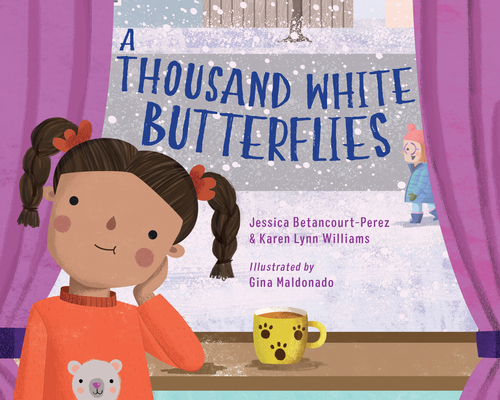
DESCRIPTION OF THE BOOK: Isabella recently immigrated from Colombia and is starting school midway through the year. But her first day is canceled due to snow, which looks like a thousand white butterflies as it falls. Being new to the United States is hard. Isabella misses Papa, and she’s nervous about making new friends. But snow days are special days-and maybe there’s a new friend waiting after all.
MY TWO CENTS: In the book A Thousand White Butterflies we meet a little girl named Isabella who has moved to the United States from Colombia. The book details her experience of moving to the U.S. while her dad stayed in Colombia. Isabella feels sad and misses her father. She is looking forward to the first day of school and sees it as an opportunity to make new friends. The next day, as she wakes up, she realizes that it is snowing outside and her first day of school in the U.S. will be cancelled. Isabella then sees a little girl playing outside and she decides to join her. Isabella and her new friend have fun playing in the snow, even though they are not able to understand each other.
This book is written for young readers and shares the immigration experiences through the eyes of a child. This book can teach children about the experience of feeling lonely and missing someone. The book is written in a simple way, but it does capture Isabella’s big feelings of sadness, loneliness, and joy. There were two great things that stood out as I read the book. The book features an intergenerational relationship between Isabella and her abuelita. Her abuelita is actually the person who points out that the snow is white “everything is white, so white. Mariposa wings dance in the sky. It looks like a thousand white butterflies.” I also like that there were words in Spanish that were used throughout the story and that these words were not followed by the direct translation of the words. The authors did provide a glossary at the end of the book for readers who are not bilingual.
The illustrations in the book are bright and colorful. The illustrations seem to fit the storyline and capture the complexity of Isabella’s feelings. The illustrations also add to the storyline as they feature important items from Colombia such as the ruana and the sombrero vueltiao. The authors’ note at the end of the book details how the authors met and also tell their own immigration stories. A section titled more info provides information about immigrants in the United States.
.
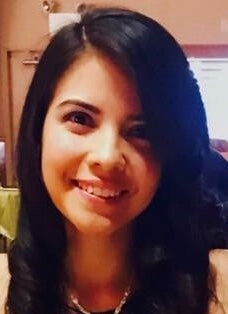
ABOUT THE AUTHORS: Jessica Betancourt-Perez is originally from Palmira, Colombia, and moved to the USA when she was 15 years old. She holds a bachelor’s degree in Psychology from the University of Saint Joseph and a master’s degree in School Psychology from Millersville University. She currently works as a school psychologist in a large suburban school district in York, Pennsylvania with children grades 4-6. She speaks English and Spanish fluently and has a passion for advocating for families and children in need. A Thousand White Butterflies is her debut picture book. Jessica lives in Pennsylvania with her family.
.
.
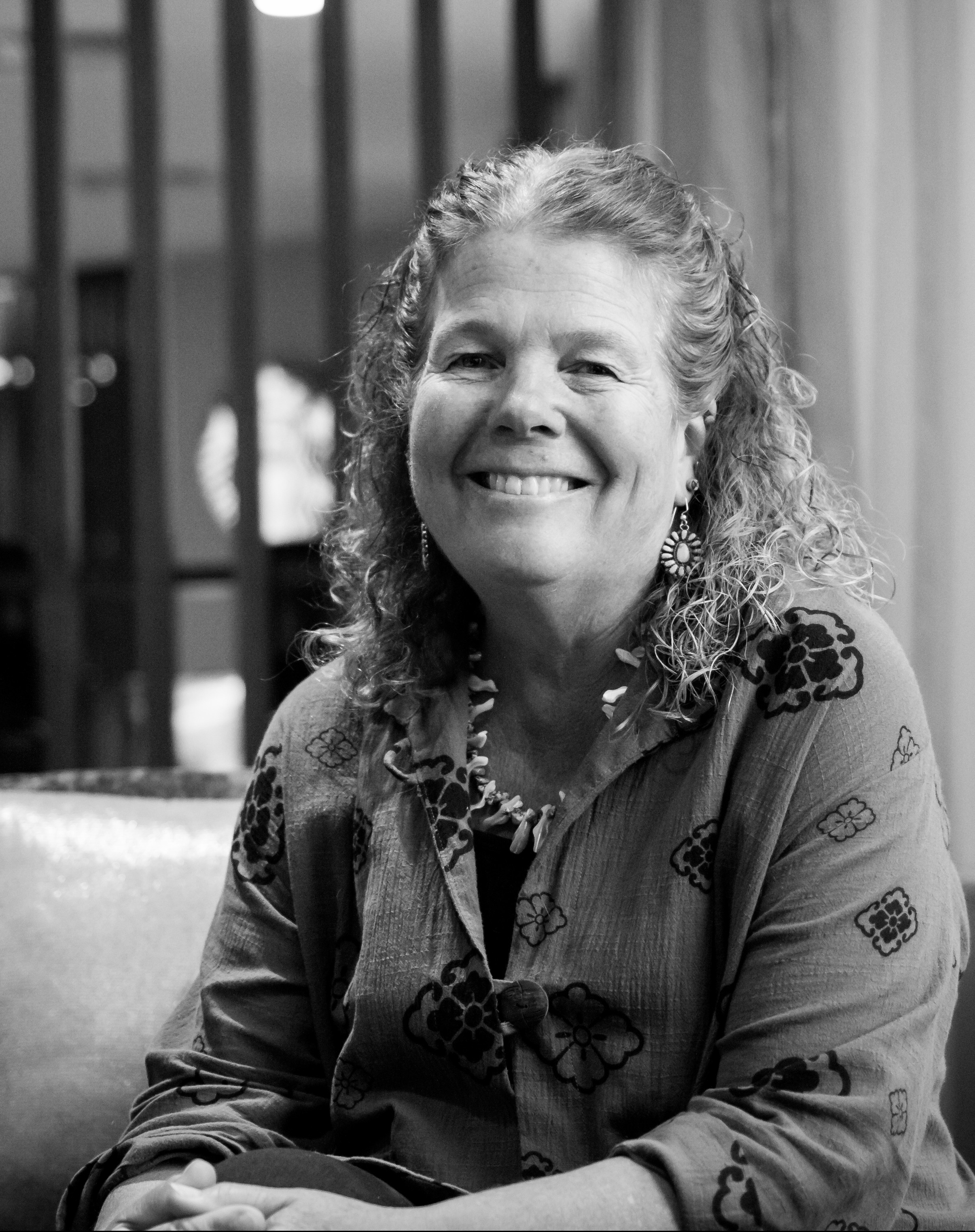
Karen Lynn Williams was born in Connecticut, and received her Master’s degree in deaf education. She has lived in Africa and in Haiti. Karen had an early dream to be one of the youngest published authors, starting a writing club at ten. However, Karen’s published works came later in life, after extensive travels and family experience. Karen’s ability to draw from personal experience and adapt into writing forms for all ages and interests expresses her true gift.
.
.
.

ABOUT THE ILLUSTRATOR: Gina Maldonado is a Colombian illustrator and print designer based in Hong Kong. Her work is inspired by nature and she is passionate about creating colourful and charming illustrations for picture books, games and products for clients all around the world. Gina studied architecture and interior design in Colombia, Mexico, and Italy, but after working as an interior designer for a couple of years, she discovered that her real passion was illustration.
.
.
.
.

ABOUT THE REVIEWER: Sanjuana C. Rodriguez is an Assistant Professor of Literacy and Reading Education in the Elementary and Early Childhood Department at Kennesaw State University. Her research interests include the early literacy development of culturally and linguistically diverse students, early writing development, literacy development of students who are emergent bilinguals, and Latinx children’s literature. She has published in journals such as Journal of Language and Literacy Education, Language Arts, and Language Arts Journal of Michigan.






 by Cecilia Cackley
 That sense of exploration is on full display in Juana and Lucas, which features a loose, sketchy quality to the ink drawings. Medina points to the British illustrator Quentin Blake as a key influence, noting that he draws with both hands, and she often does too, or sometimes draws with one hand and colors with the other. Another favorite artist is Joaquin Salvador Lavado, better known by his pen name Quino, who created the iconic comic strip Mafalda for the Argentine newspaper El Mundo. Medina gushes about Quino’s “level of expressiveness.” She points out: “He includes wit in such simple traces and achieves complexity and an incredible level of detail in just a few lines.”
 For Juana and Lucas, Medina experimented with sketches in pencil first, then used a light box to draw the final version of each illustration in ink. Watercolor came next and the drawing was then scanned so that the colors could be adjusted digitally. This process also allowed Medina to correct small errors without having to redraw an entire composition. She showed me one spread containing an airplane that hadn’t been in the original sketch. Later in the process, it was added digitally to cover up an unruly inkblot!
 The dynamic presentation of text (words that curve, get bigger or in other ways deviate from the standard type) featured throughout the story was Medina’s idea. Her thinking is that typography is part of language, explored, and it can cue certain meanings of words that may be unfamiliar to young readers.
 For readers in the United States used to seeing European cities such as London or Paris in children’s literature, it’s a breath of fresh air to get such a detailed, child’s-eye view of a major South American city. Medina went back to Bogotá after writing several versions, and says the trip was bittersweet. “It was the first time there without my grandparents, without having a place there to call home. It was a difficult trip, but it was sweet to see the mountains and smell the eucalyptus, and it was validating to see everything. I took some license in the book. I’m not tying myself to fact-checking everything, which was liberating in a way. There was a lot I left out, especially surrounding the conflict and civil war I grew up with. That’s something I’ll maybe address in another book. The hardest illustration was my grandparents’ house, which no longer exists. It was a safe haven, so no illustration could truly do it justice.”
 Cecilia Cackley is a performing artist and children’s bookseller based in Washington, DC, where she creates puppet theater for adults and teaches playwriting and creative drama to children. Her bilingual children’s plays have been produced by GALA Hispanic Theatre and her interests in bilingual education, literacy, and immigrant advocacy all tend to find their way into her theatrical work. You can find more of her work at


 Latinxs in Kid Lit