Review by Elena Foulis
 DESCRIPTION OF THE BOOK: “Do you know what a stereotype you are?” Jessica asks her son. “You’re the existential Chicano.” Fourteen-year-old Victor has just been released from the hospital; his chest is wrapped in bandages and his arm is in a sling. He has barely survived being shot, and his mother accuses him of being a cholo, something he denies.
She’s not the only adult who thinks he’s a gangbanger. His sociology teacher once sent him to a teach-in on gang violence. Victor’s philosophy is that everyone is racist. “They see a brown kid, they see a banger.” Even other kids think he’s in a gang, maybe because of the clothes he wears. The truth is, he loves death (metal, that is), reading books, drawing, the cartoonist Lalo Alcaraz, and the Showtime series Weeds. He likes school and cooking. He knows what a double negative is!
But he can’t convince his mom that he’s not in a gang. And even with a genius girlfriend and an art teacher who mentors and encourages him to apply to art schools, Victor can’t seem to overcome society’s expectations for him.
MY TWO CENTS: Daniel Chacón’s novel, The Cholo Tree, is a story that confronts stereotypes within one’s own community and family. Told from the perspective of a young Chicano protagonist, this story exposes not only obstacles a young teen in a impoverished neighborhood might face, but also what contributes to perpetuating a cycle of violence, gang-culture, and drugs when young, Latino men repeatedly hear assumptions about who they might be or what they are destined to become. The protagonist, Victor, navigates hearing these messages from people like his own mother or teachers who assume he is a gangbanger, although he is not. Chacón tells the story of a young Chicano teen who is navigating school, a single parent household, and his gift as an artist.
After his near-death experience, Victor navigates high school life, confronting stereotypes on a daily basis. One thing that catches the reader’s attention is the school administrators’ and teachers’ insistence that Victor must belong in a gang because he is Chicano, plus the clothes he wears and his attitude. However, this does not stop at school. Often, his own mother, who he calls Jessica, accuses him of being a gangbanger, a cholo. While Victor is no angel, the reader can come to understand the impact of placing labels on Latino youth, and how, in particular, young artists risk being boxed into stereotypes that see them as dangerous or a menace to society.
Victor is often a spectator, an observer of his environment and surroundings, which he realizes contributes to many of the negative labels society puts on young brown men like him. Indeed, through his interactions with a group of young men, who are involved in drug using and selling, he tries to rescue two sisters getting caught in this lifestyle. He uses his drawings to engage with them and possibly persuade them to see themselves as young women who deserve better lives, and he remembers what his friend Freddy once said to him when Victor became interested in Iliana, a genius girl he had met at a party and Victor’s love interest, “Every Chicanita is my sister.”
One of the things that saves Victor is his relationship with an art teacher, Mr. García, who is possibly the only person who sees his gift as an artist and helps him see himself as something different than what society expects of him. Mr. García not only lets Victor use his own studio, he encourages Victor to apply to prestigious art schools, which he has not considered as a possibility for himself. Chacón uses imagery and fantasy and the complexity of family dynamics to make this a story worth reading.
 ABOUT THE AUTHOR: Daniel Chacón is the author of Hotel Juárez: Stories, Rooms and Loops (Arte Público Press, 2013); Unending Rooms (Black Lawrence Press, 2008), winner of the Hudson Prize; and the shadows took him (Washington Square Press, 2005) and Chicano Chicanery (Arte Público Press, 2000). A professor at the University of Texas at El Paso, he is co-editor of The Last Supper of Chicano Heroes: The Selected Works of José Antonio Burciaga (University of Arizona Press, 2008).
 ABOUT THE REVIEWER: Elena Foulis has a Ph.D. in Comparative Literature and Cultural Studies from the University of Arkansas. Her research and teaching interests include U.S. Latina/o literature, and Digital Oral History. Dr. Foulis is currently working on a digital oral history project about Latin@s in Ohio, which is being archived at the Center for Folklore Studies’ internet collection. Some of these narratives can be found in her iBook titled, Latin@ Stories Across Ohio.
 DESCRIPTION OF THE BOOK: Telegrams to Heaven / Telegramas al Cielo recounts the moving childhood of Archbishop Óscar Arnulfo Romero y Galdámez, who from an early age discovers the candor, light and power of the word, which he uses to pray and to write poetry, sending telegrams to heaven from his heart. René Colato Laínez, the renowned Salvadoran writer, has written a touching story about the great Salvadoran prophet who dreamed from his childhood of being a priest, and became not only a priest, but also a bishop, an archbishop, and the great orator of his country. His word remains, for the Salvadoran people and the world—a prayer, a poem, a sweet telegram that Archbishop Romero continues to send in the name of his people to the heart of heaven. The colorful, modern illustrations of Pixote Hunt make us reflect with deep tenderness, showing us the innocence of the great Archbishop Romero as a young child.
 ABOUT THE AUTHOR: Known as “the teacher full of stories,” René Colato Laínez is the Salvadoran author of several bilingual picture books including I Am René, the Boy/Soy René, el niño (Piñata Books), Waiting for Papá/Esperando a papá (Piñata Books), Playing Lotería/ El juego de la lotería (Luna Rising). I Am René, the Boy received the Latino Book Award for “Best Bilingual Children’s Book.” Playing Lotería was named a “Best Children’s Book” by Críticas magazine and the New Mexico Book Award “Best Children’s Book.” Playing Lotería and I Am René have both been nominated for the Tejas Star Book Award—the K-6 bilingual counterpart to the Texas Bluebonnet Award.
 ABOUT THE ILLUSTRATOR (From his
  ABOUT THE REVIEWER: Jessica Agudelo is a Children’s Librarian at the New York Public Library. She has served on NYPL’s selection committee for its annual Best Books for Kids list, and is currently a co-chair for the 2018 list. She contributes reviews of English and Spanish language books for School Library Journal and is a proud member of the Association of Library Services to Children and REFORMA (the National Association to Promote Library and Information Services to Latinos and Spanish Speakers). Jessica is Colombian-American and was born and raised in Queens, NY.
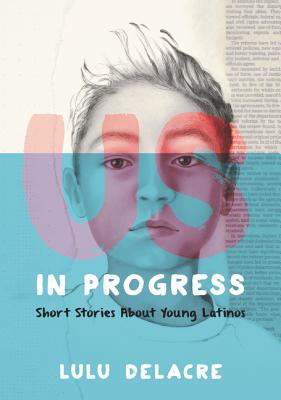 DESCRIPTION OF THE BOOK: Acclaimed author and Pura Belpré Award honoree Lulu Delacre’s beautifully illustrated collection of twelve short stories is a groundbreaking look at the diverse Latinxs who live in the United States.
 ABOUT THE AUTHOR: Three-time Pura Belpré Award honoree Lulu Delacre has been writing and illustrating children’s books since 1980. Born and raised in Puerto Rico to Argentinean parents, Delacre says her Latino heritage and her life experiences inform her work. Her 37 titles include Arroz con Leche: Popular Songs and Rhymes from Latin America, a Horn Book Fanfare Book in print for over 25 years; and Salsa Stories, an IRA Outstanding International Book. Her bilingual picture book ¡Olinguito, de la A a la Z! Descubriendo el bosque nublado; Olinguito, from A to Z! Unveiling the Cloud Forest has received 20 awards and honors including an NCTE Orbis Pictus Honor and an ALA Notable for All Ages. Her most recent title, is Us, in Progress: Short Stories About Young Latinos. Delacre has lectured internationally and served as a juror for the National Book Awards. She has exhibited at The Eric Carle Museum of Picture Book Art; The Original Art Show at the Society of Illustrators in New York; the Museum of Art of Puerto Rico and the Museum of Ponce in Puerto Rico among other venues.
 ABOUT THE ILLUSTRATOR: Mike Curato loves drawing and writing almost as much as he loves cupcakes and ice cream (and that’s a LOT!). He is the author and illustrator of everyone’s favorite polka-dotted elephant, Little Elliot. His debut title,
  ABOUT THE REVIEWER: Cecilia Cackley is a performing artist and children’s bookseller based in Washington, DC, where she creates puppet theater for adults and teaches playwriting and creative drama to children. Her bilingual children’s plays have been produced by GALA Hispanic Theatre and her interests in bilingual education, literacy, and immigrant advocacy all tend to find their way into her theatrical work. You can find more of her work at
  DESCRIPTION OF THE BOOK: Marcos Rivas yearns for love, a working cell phone, and maybe a pair of sneakers that aren’t falling apart. But more than anything, Marcos wants to get out of Maesta, his hood, away from his indifferent mom and her abusive boyfriend—which seems impossible.
 ABOUT THE AUTHOR:
  ABOUT THE REVIEWER: Cris Rhodes is a doctoral student at Texas A&M University – Commerce. She received a M.A. in English with an emphasis in borderlands literature and culture from Texas A&M – Corpus Christi, and a B.A. in English with a minor in children’s literature from Longwood University in her home state of Virginia. Cris recently completed a Master’s thesis project on the construction of identity in Chicana young adult literature.
 DESCRIPTION OF THE BOOK:
  ABOUT THE AUTHOR:
  Latinxs in Kid Lit