.
Review by Dora M. Guzmán

DESCRIPTION OF THE BOOK: As a little girl, Teresa Carreño loved to let her hands dance across the beautiful keys of the piano. If she felt sad, music cheered her, and when she was happy, the piano helped her share that joy. Soon she was writing her own songs and performing in grand cathedrals.
Then a revolution in Venezuela drove her family to flee to the United States. Teresa felt lonely in this unfamiliar place, where few of the people she met spoke Spanish. Worst of all, there was fighting in her new home, too- a Civil War.
Still, Teresa kept playing, and soon she grew famous as the talented Piano Girl who could play anything from a folk song to a sonata. So famous, in fact, that President Abraham Lincoln wanted her to play at the White House! Yet with the country torn apart by war, could Teresa’s music bring comfort to those who needed it the most?
MY TWO CENTS: Dancing Hands is a biographical picture book about María Teresa Carreño Garcia de Sena that embraces creativity, family, and music during turmoil in Venezuela and the United States. Teresa, also known as Piano Girl, learns early on that music is an art for others to enjoy in the moment and in their hearts. Despite inevitable conflict in both her home country, Venezuela, and her new home, the United States, music becomes her refuge. Playing the piano calms the storms, brings together her family, and inspires other artists, and even the president in office, Abraham Lincoln.
While the text is in English only, the language used to describe Teresa’s talent is filled with poetic and descriptive language. It moves the reader through a narrative timeline of events and emotions. The illustrations are phenomenal and invoke more emotions as the reader learns about Teresa’s life changes. The use of acrylic paint and its textured shades contrast against the sharp lines and fierce colors that spread across each page. Each page has strategically placed colors and imagery placement to convey the story’s mood. Still, Teresa’s life experiences and talents remain front and center, with her connection to her music and cultures highlighted. My favorite moment in her story is when, as a young child, Teresa inspired other musicians to come and create music. It shows how far and wide her inspiration reached even at a young age!
TEACHING TIPS: Many of these teaching moments can be implemented in a K-5 setting, with a focus on the grades 3 and up.
- Writing Mentor Text
- Descriptive language: The author provides a plethora of metaphors and descriptive language that can serve as models for student writing when used to describe objects, moments, and feelings.
- Mini lesson on adjectives and verbs
- Addition to a biography unit or music unit
- The historical note at the end of the book can serve as a catalyst for further research into the life of María Teresa Carreño Garcia de Sena. Student researchers can also find out more about her music and how it added to the arts during and after her time.
- In music class, students can learn more about her compositions, as well as listen to her music compositions to add to their study.
- Author and illustrator study
- Pair this text with other picture books written by Margarita Engle and compare her writing style as well as the characters.
- Pair this text with other picture books illustrated by Rafael López and compare his artistic style.
Listen to María Teresa Carreño Garcia de Sena’s composition called La Falsa Nota played by another pianist.
.
.

ABOUT THE AUTHOR: Margarita Engle is the Cuban-American author of many acclaimed books, including two other collaborations with Rafael López, Bravo! and Drum Dream Girl, as well as The Flying Girl; All the Way to Havana; Miguel’s Brave Knight; The Surrender Tree, a Newbery Honor book; Jazz Owls; The Poet Slave of Cuba; and her memoirs Enchanted Air and Soaring Earth. She lives in central California. Visit her at margaritaengle.com Follow her on Twitter: @margaritapoet
.
.

ABOUT THE ILLUSTRATOR: Rafael López was born and raised in Mexico, a place that has always influenced the vivid colors and shapes in his artwork. He now creates community-based mural projects around the world and illustrates acclaimed children’s books, including The Day You Begin, Bravo!, Drum Dream Girl, We’ve Got the Whole World in Our Hands, and Book Fiesta! Rafael divides his time between Mexico and California. Visit him at https://rafaellopez.com/
.
.
.
.

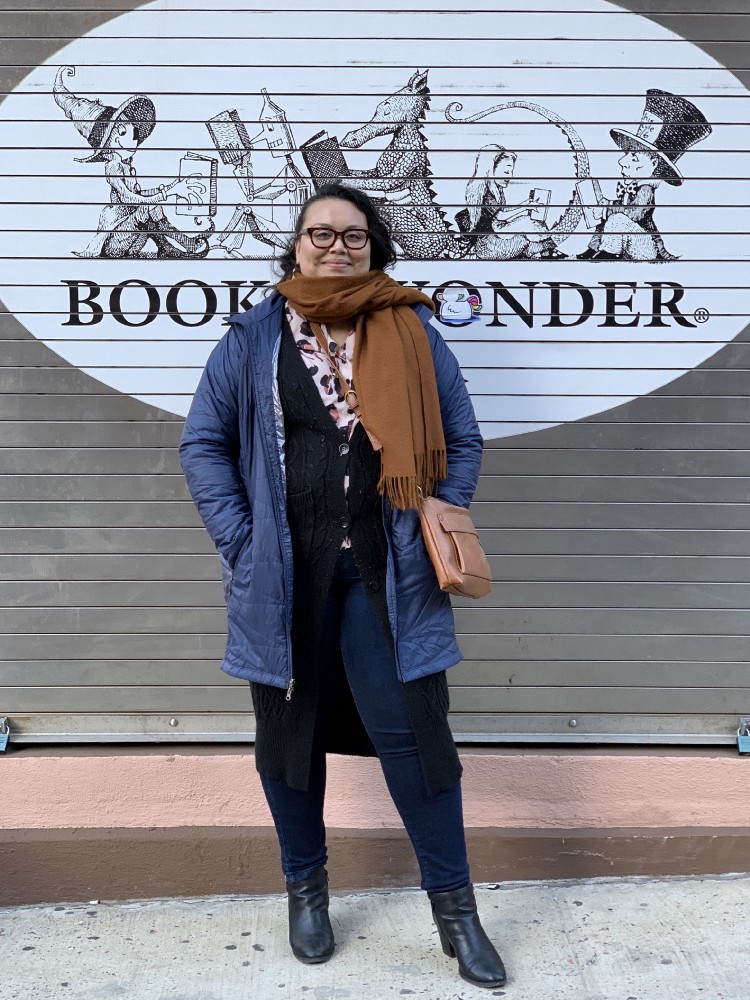
ABOUT THE REVIEWER: Dora M. Guzmán is a bilingual reading specialist for grades K-5 and also teaches undergraduate and graduate courses in Children’s Literature and Teaching Beginning Literacy. She is also a current doctoral student in NLU’s EdD Teaching and Learning Program with an emphasis on Reading, Language, and Literacy. When she is not sharing her love of reading with her students, you can find her in the nearest library, bookstore, or online, finding more great reads to add to her never-ending “to read” pile!

 ABOUT THE AUTHOR (from the book):
  ABOUT THE REVIEWER: Dora M. Guzmán is a bilingual reading specialist for grades K-5 and also teaches undergraduate and graduate courses in Children’s Literature and Teaching Beginning Literacy. She is also a current doctoral student in NLU’s EDD Teaching and Learning Program with an emphasis on Reading, Language, and Literacy. When she is not sharing her love of reading with her students, you can find her in the nearest library, bookstore, or online, finding more great reads to add to her never-ending “to read” pile!
 ABOUT THE AUTHOR-ILLUSTRATOR:
  DESCRIPTION OF THE BOOK: What’s that terrible smell? Plug your nose! Run! Something smells…rotten! But rotten isn’t always bad. If nothing ever rotted, nothing could live. Decomposition seems like the last stop on the food chain, but it’s just the beginning. When dead things rot, they give life to a host of other creatures. So who are these decomposers? Sharks and vultures feast on animal carcasses. Worms, maggots, and dung beetles devour decaying plant and animal matter. Decomposition is happening everywhere: oceans, forests, in your backyard—even between your teeth! It’s nature’s way of creating energy for all living things. So unplug your nose! Open this book to uncover the dirty rotten truth about one of nature’s most fascinating processes.
 ABOUT THE AUTHOR: (from the dust jacket) Anita Sanchez loves to explore nature, even the stinky, slimy parts of it. She dug into the world of rot by creating a compost pile, viewing vultures, watching worms, and even swimming with (very small) sharks. Check out her blog about unloved plants and animals at
  ABOUT THE REVIEWER: Emily R. Aguiló-Pérez is an Assistant Professor of English (Children’s Literature) at West Chester University of Pennsylvania. Her teaching and research are in the areas of children’s literature (particularly Latinx literature), girlhood studies, and children’s cultures. Her published work has focused on girlhood as represented in literature and Puerto Rican girls’ identity formation with Barbie dolls. She has presented research on Latinx children’s books at various conferences and has served on children’s book award committees such as the 2017 Lee Bennett Hopkins Poetry Award and the 2018 Pura Belpré Award. Currently, she is part of the Pennsylvania Center for the Book’s “A Baker’s Dozen” committee.
 ABOUT THE AUTHOR: R
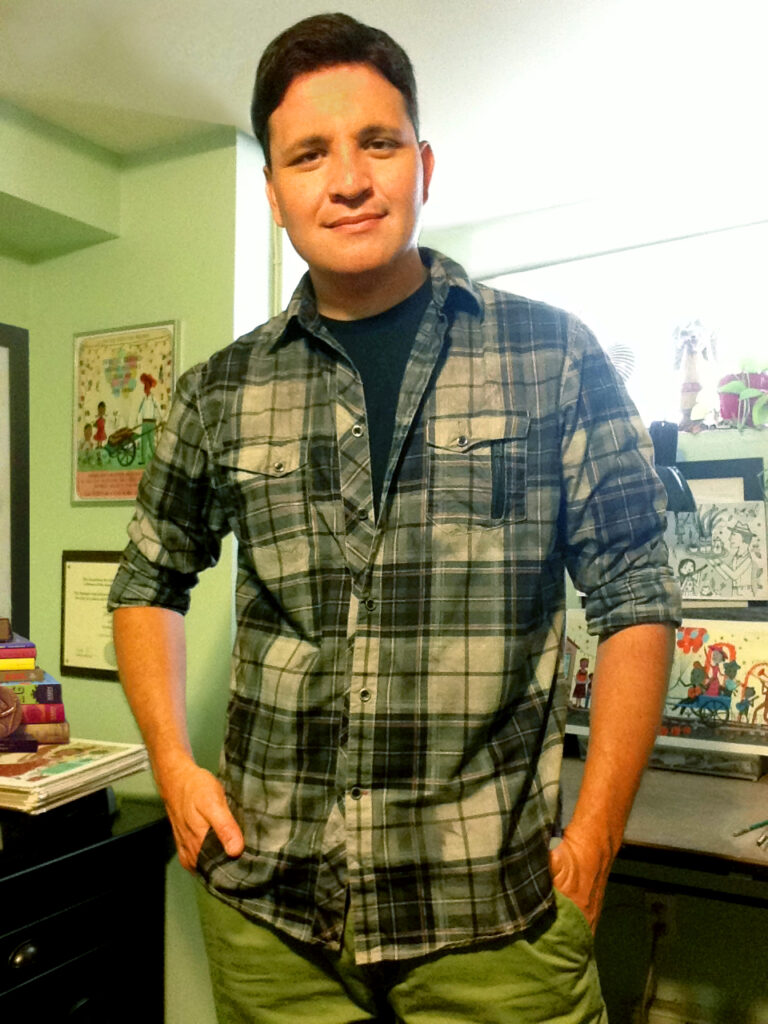 ABOUT THE ILLUSTRATOR: John Parra is an award-winning illustrator, designer, teacher, and fine art painter whose work is avidly collected. John’s books have received starred reviews and have appeared on the Texas Library Association’s 2×2 Reading List. He has received the SCBWI Golden Kite Award for Illustration, the International Latino Book Award for Best Children’s Book Illustrations, and a Pura Belpré Illustrator Honor for Gracias/Thanks, written by Pat Mora. Find out more about him on his website
  Latinxs in Kid Lit